
Online Roulette Explained: How to Play and Win Smart
Here's a number that puts things in perspective: the global online gambling market is estimated at roughly USD 121.93 billion in 2026, and roulette sits near the heart of it. Spin a wheel, drop a ball, pick a number, that simple loop has survived centuries and jumped straight onto your phone. If you want to skip the theory and just try a few spins, you can explore our online roulette games whenever you're ready.
But playing well means knowing what you're actually up against. The maths behind online roulette isn't a secret, and neither is the house edge. According to Mordor Intelligence, smartphone penetration and friendlier regulation are pushing players toward digital tables at a fast clip. So let's break down how the game works, where your money really goes, and what "provably fair" changes for you.
How the wheel actually works
Roulette is beautifully simple. A wheel holds numbered pockets, a ball spins, and you bet on where it stops. You can back a single number, a color, odds or evens, or big groups like dozens and columns.
The catch is in the payouts versus the odds. A single number pays 35 to 1, but there are more than 35 pockets on the wheel. That gap is the house edge, and it's how the casino stays in business over thousands of spins.
Bets split into two camps. Inside bets cover specific numbers and pay big but land rarely. Outside bets like red or black cover nearly half the wheel and pay small but hit often. Neither beats the maths long term, they just change how bumpy the ride feels.

European vs American wheels: know the house edge
Not all roulette is created equal. The single biggest choice you make happens before you even bet: which wheel you play.
The European wheel has 37 pockets, numbers 1 to 36 plus a single zero. That gives it a house edge of about 2.7%. The American wheel adds a double zero, bumping it to 38 pockets and roughly a 5.26% edge. Same game, nearly double the cost to your bankroll.
Here's a quick comparison, including how a crypto-based table changes the trust equation:
Feature | European | American | Suigar wheel
Pockets | 37 (single zero) | 38 (double zero) | Provably fair setup
Typical house edge | ~2.7% | ~5.26% | Verifiable on-chain
Outcome check | Trust the operator | Trust the operator | Publicly verifiable
Payouts | Varies by site | Varies by site | Instant
KYC required | Usually yes | Usually yes | No KYC
The takeaway is blunt: if both are offered, the single-zero wheel is almost always the smarter pick. If you want to feel the difference across formats, you can compare how we handle roulette for real cash against classic setups.
Where the market is heading in 2026
Roulette isn't fading, it's scaling. The digital gambling sector keeps posting double-digit growth, and casino table games are riding that wave.
According to Research and Markets, the online gambling market is set to climb from about USD 130.2 billion in 2025 to USD 143.17 billion in 2026, at a 10% compound annual growth rate. Different firms use different scopes, so headline figures vary, but the direction is consistent: up, and fast.
Regulation is a big driver. In the US, for example, Polaris Market Research notes that states like Pennsylvania now allow iGaming, letting players legally enjoy blackjack, poker, and roulette online. More regulated markets mean more players discovering the wheel through a screen rather than a felt table.
Betting strategies: what works and what doesn't
Ever heard of the Martingale? You double your bet after every loss, aiming to recover everything with one win. It sounds bulletproof on paper.
In reality, it collides with two walls: your bankroll and the table limit. A short losing streak can balloon your stake past what you can afford, or past what the table allows. The house edge never disappears, no matter how you stack your chips.
Systems like Fibonacci, D'Alembert, or flat betting all shuffle risk around without erasing it. That's not a reason to avoid them, some make the session more fun or slower to burn. Just treat them as bankroll management tools, not magic. The honest strategy is simple: pick the lower-edge wheel, set a budget, and quit while it's still entertainment.
Provably fair roulette: verify, don't just trust
Here's the question traditional online roulette never fully answered: how do you know the spin was random? On most platforms, a private server runs the random number generator, and you're asked to trust it.
Crypto casinos flip that. On our platform, every result is settled with on-chain randomness and is publicly verifiable, with instant payouts and no KYC. Instead of trusting a hidden system, you can check the outcome yourself on the blockchain. For extra reassurance, our smart contracts were independently audited by MoveBit in a report dated November 2025.

This matters because trust is the whole game. When you can independently verify the wheel, "rigged" complaints stop being a matter of opinion. If you're curious how this feels next to traditional sites, our guide on how to play real-casino games online walks through the practical side.
Live dealer vs RNG roulette
Some players want a human spinning a physical wheel over video. Others prefer instant, software-driven spins they can fire off in seconds. Both exist online, and both are growing.
Live dealer keeps winning fans for a reason. According to industry analysis, the visible reality of real roulette spins builds a durable sense of trust and authenticity, plus a social feel that pure software games struggle to match. That "more real" factor keeps live tables popular.
RNG and crypto roulette answer the same trust question a different way. You don't watch a person, but you can verify the outcome on-chain. It's speed and math transparency versus atmosphere, and honestly, neither is wrong. It comes down to what makes your session feel right.
The smart way to spin
Playing online roulette well isn't about secret systems, it's about clear choices. Pick the single-zero European wheel when you can, understand that the house edge is fixed, and set a budget before your first spin. The biggest upgrade in recent years is verifiability: platforms that let you check randomness on-chain remove the guesswork about fairness. Treat every session as entertainment with a price tag, lean on lower-edge tables, and you'll enjoy the wheel a lot longer than someone chasing a foolproof strategy that doesn't exist.
Take action with Suigar
You've seen the theory, now the fun part. If a wheel where you can actually verify the outcome sounds better than crossing your fingers and hoping the server was honest, that's exactly what we built. No hidden RNG, no long sign-up forms, just spin and check.
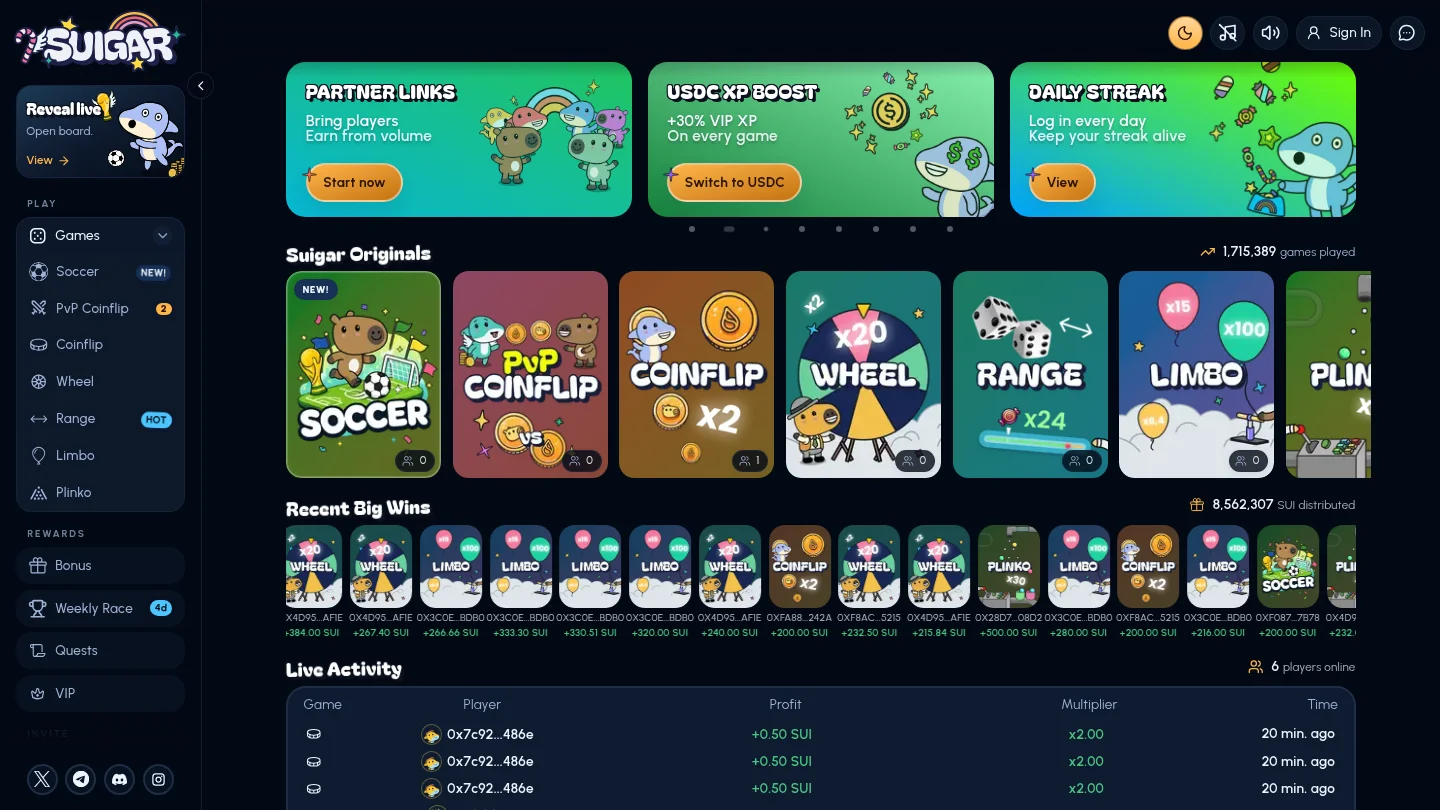
Connect a Sui-compatible wallet and try our provably fair crypto wheel, where every result is settled with on-chain randomness and is publicly verifiable. You get instant payouts, no KYC, and smart contracts independently audited by MoveBit. It's the trust layer traditional online roulette never gave you, ready whenever you want to play.
Frequently Asked Questions
Is European or American roulette better to play?
European roulette is usually the smarter choice because it has one zero instead of two. That drops the house edge to about 2.7%, compared to roughly 5.26% on American wheels. Same gameplay, lower cost to your bankroll over time.
Can any strategy beat the house edge?
No betting system removes the built-in house edge. Strategies like Martingale or Fibonacci just move risk around and can drain your bankroll fast during a losing streak. Use them for pacing, not as a guaranteed way to win.
What does "provably fair" actually mean?
It means the outcome of each spin can be independently verified rather than taken on trust. On our platform, results are settled with on-chain randomness and are publicly verifiable, so you can confirm a spin wasn't manipulated. Traditional sites usually rely on a private server you can't inspect.
Do I need to hand over ID to play crypto roulette?
It depends on the platform. Some require full identity checks, while our setup states there's no KYC for play. You connect a Sui-compatible wallet and start with supported tokens, keeping the sign-up friction low.
Is live dealer roulette more trustworthy than software versions?
Live dealer feels authentic because you watch a real wheel spin on video, and many players value that. Software and crypto versions build trust differently, through verifiable randomness you can check yourself. Both are legitimate, so pick the experience you prefer.