Your Ultimate Guide to Gambling Games and How to Play
Summary: Gambling games span slots, blackjack, roulette, and more, with the global market projected to surpass $655 billion in 2026.
Here's a wild number for you: according to Gambling Insider, global gambling revenue passed $643 billion in 2025, and projections point above $655 billion in 2026. That's not a niche hobby; that's a global phenomenon. Whether you're spinning reels, counting cards, or rolling dice, gambling games are everywhere, and more people are playing them online than ever before. If you've been curious about diving in (or leveling up), you're in the right place. Check out our casino games for a taste of what's possible.
The variety can feel overwhelming at first. Slots, poker, baccarat, craps, roulette; each game has its own rules, odds, and vibe. And now, with blockchain technology entering the picture, there's a whole new layer of transparency and speed on the table. This guide breaks down the most popular types, explains what gives you the best shot, and shows you where the industry is heading in 2026.
What Makes Gambling Games So Popular Right Now?
It's not just about luck anymore. The growing penetration of high-speed internet and the general adoption of smartphones for gaming remain key drivers of market growth. About 80% of online gamblers used smartphones in 2025, and in the U.S., mobile devices generated over 80% of all online gambling revenue. You can literally play a hand of blackjack while waiting for your coffee.
The online gambling market alone was valued at $88 billion in 2025 and is projected to grow to $97.7 billion in 2026. That kind of growth tells you something: people aren't just dabbling. They're sticking around. Games are faster, visuals are sharper, and the experience on mobile feels just as smooth as desktop.
There's also a social element. Live dealer games, multiplayer poker rooms, and community features keep players engaged beyond the spin or the hand. It's entertainment, plain and simple.
The Most Popular Types of Casino Games Explained
Not all games are created equal. Let's walk through the big ones so you know what you're getting into.
Slots
Online slots are the bread and butter of any casino. They're easy to understand (match the symbols, win the prize) and come in thousands of themes. From ancient Egypt to outer space, there's a slot for every mood. RTPs (return to player percentages) typically hover around 96%, though some titles push above 98%. If you love variety and fast action, slots are your jam. You can explore our online slots to see what provably fair reels feel like.
Blackjack
This card game is legendary for a reason. The standard house edge sits at around 0.5%, making it one of the most player-friendly games out there. Your decisions actually matter; hitting, standing, doubling down, and splitting all influence the outcome. It's the perfect blend of skill and chance.
Roulette
Pick a number, pick a color, or go with an outside bet. European roulette carries a house edge of about 2.7%, while American roulette (with that extra double-zero pocket) bumps it up to 5.26%. Stick with European if you want better odds.
Poker
Video poker and live poker rooms offer different experiences. Video poker can reach RTPs above 99% with optimal play, while live poker pits you against other players rather than the house. It's the most skill-intensive game on this list.
Baccarat and Craps
Baccarat's banker bet has a house edge of just 1.06%, making it a quiet favorite among smart players. Craps, with its Don't Pass Line bet at 1.36%, offers one of the most exciting table experiences. Both are worth your time.
Understanding House Edge and RTP
You'll hear these terms thrown around constantly, so let's clear them up. The house edge is the casino's built-in advantage, expressed as a percentage. A 2% house edge means the casino expects to keep $2 out of every $100 wagered over time. RTP is just the flip side: a 98% RTP means the game theoretically returns $98 of every $100 played.
Here's the catch: these are long-term statistical averages, not guarantees for any single session. You could win big or lose your bankroll in 20 minutes. That said, choosing games with lower house edges gives you more runway for your money. It's not foolproof, but it's smart.
Game | Typical House Edge | Skill Involved? | Best For
Suigar On-Chain Games | Very low (verifiable) | Varies | Transparent, provably fair play
Blackjack | 0.5% | Yes | Strategy lovers
Baccarat (Banker) | 1.06% | No | Low-edge seekers
European Roulette | 2.7% | No | Classic casino feel
Slots | 2–6% | No | Casual fun, big jackpots
Keno | 25–40% | No | Lottery-style thrills
One thing traditional casinos can't always offer is proof that those odds are real. That's where blockchain-based platforms change the game (more on that below).
The Online Gambling Boom: Where the Numbers Are Heading
The online gambling market is currently valued at $120.35 billion in 2026, according to DemandSage's latest data. The numbers are expected to grow to $211.99 billion by 2031, reflecting a CAGR of 11.99%. Those aren't small jumps.
About 1 in 5 adults globally had gambled online in 2025. That's a massive addressable audience, and it keeps expanding as more countries regulate and legalize digital betting. Live and in-play wagering now represents 53.4% of all online betting activity as of early 2026, which shows just how much the experience has shifted toward real-time, interactive play.
Mobile is the engine driving everything. Nearly 80% of online gamblers use smartphones as their primary device. If a platform doesn't work beautifully on your phone, it's already behind.
Why Provably Fair Gaming Is the Real Game-Changer
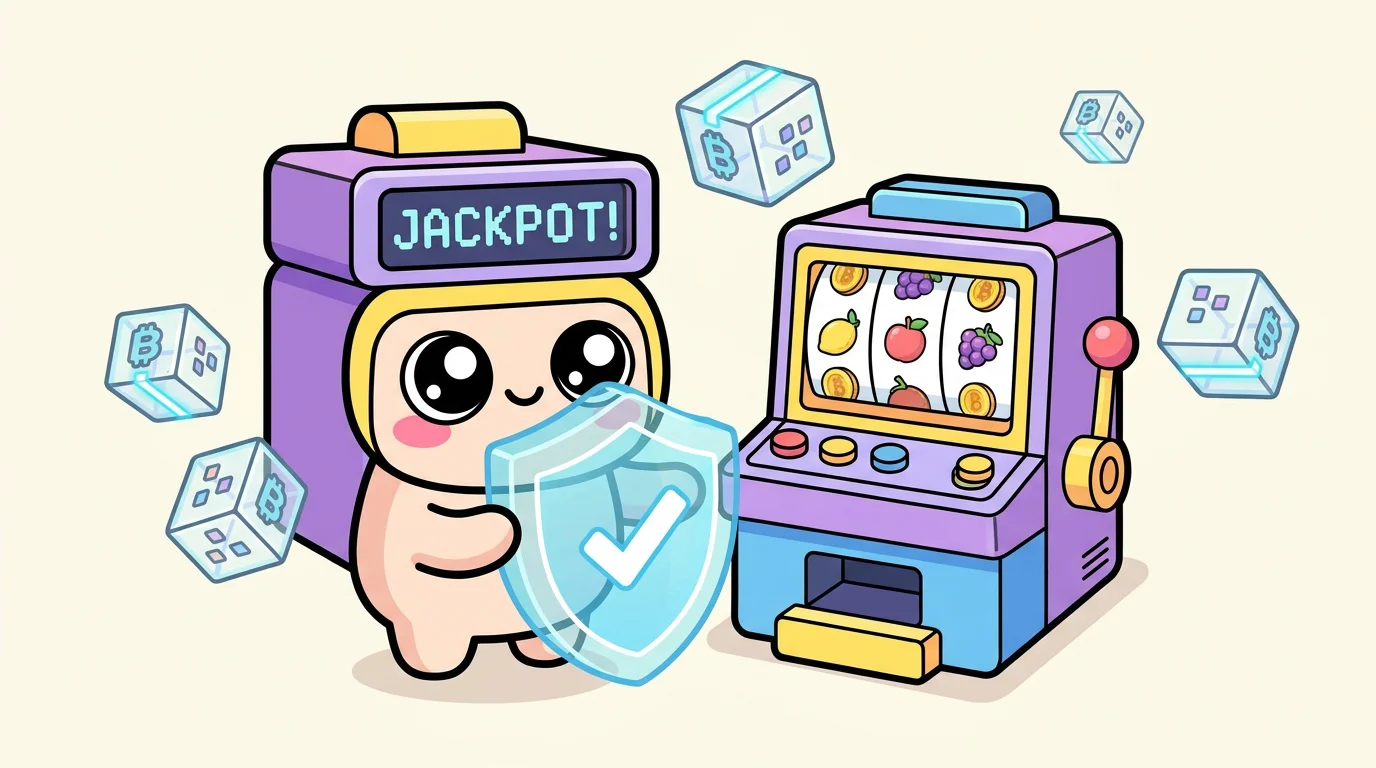
Traditional casinos (online or offline) ask you to trust them. "The odds are fair," they say. But how do you verify that? You can't. That's been the elephant in the room for decades. Provably fair technology flips the script entirely.
With on-chain gaming, every result gets recorded on a public blockchain. You can check it yourself. No blind trust required. This is a huge deal for players who've ever wondered if the deck was stacked against them. The transparency isn't a marketing buzzword; it's a verifiable, auditable reality.
We built our platform around this exact principle. Every game result on our platform is written on-chain with a public receipt, and our system is audited by MoveBit for extra confidence. If you're tired of "just trust us" gaming, you might want to explore our best online casino games to see what verified fairness actually looks like.
On-Chain Casinos vs. Traditional Platforms
Let's be real: traditional online casinos have come a long way. They're polished, regulated in many jurisdictions, and offer tons of variety. But they still operate on a custodial model. You deposit funds, the casino holds them, and you hope everything goes smoothly when you want to withdraw.
The online gambling market is projected to reach $101.45 billion by 2026, and key drivers include the rise of smartphones, 5G rollout, and evolving regulations. Within that growth, a GlobeNewsWire report notes that crypto and blockchain-based platforms are carving out their own segment.
On-chain casinos solve several pain points at once. Your funds stay in your wallet (non-custodial design), payouts settle instantly on-chain, and there's no KYC friction slowing you down. It's a fundamentally different experience. You keep control, and you can verify every outcome. That's not something most traditional platforms can match.
If you want to try our online casino games, you'll see firsthand how instant settlement and wallet-first design change the feel of every session.
Tips for Choosing the Right Games for You
With so many options, how do you decide? Here are some practical pointers:
- Know your risk tolerance. Low house edge games like blackjack and baccarat give you more playtime per dollar. High-variance slots offer bigger payouts but drain your balance faster.
- Check the RTP. Always look at the paytable before you play. Anything above 96% is solid for slots. For table games, aim for the lowest house edge versions available.
- Go mobile-first. If you're playing on your phone (and statistically, you probably are), make sure the platform is optimized for it.
- Look for transparency. Can you verify outcomes? Are the odds published and auditable? These aren't just nice-to-haves anymore; they're baseline expectations.
- Set a budget. This one's non-negotiable. Decide what you're comfortable losing before you start, and stick to it. Responsible gaming isn't optional.
Responsible Gaming: Don't Skip This Part
Up to 10.5 million U.S. adults face gambling-related harm annually. That number matters. No game, no jackpot, no winning streak is worth compromising your financial or mental health. Gambling Insider's 2026 statistics roundup lays out the data clearly.
Set deposit limits. Take breaks. Use the self-exclusion tools that reputable platforms offer. And if you feel like gaming is becoming more of a compulsion than entertainment, reach out to organizations like the National Council on Problem Gambling. This stuff is serious, and being informed is the first step.
Wrapping It Up: What's Your Next Move?
The world of games for gambling is bigger, faster, and more transparent than it's ever been. The overall gambling market is projected to grow from $574.55 billion in 2025 to $600.98 billion in 2026 at a CAGR of 4.6%, and the online segment is leading the charge. Whether you're drawn to the strategy of blackjack, the thrill of slots, or the elegance of baccarat, there's never been a better time to play.
What sets certain platforms apart in 2026 is transparency: verifiable odds, instant payouts, and a wallet-first approach that keeps you in control of your funds. To experience what provably fair, on-chain gaming actually feels like, explore our gambling games collection and see the difference for yourself.
Frequently Asked Questions
Which gambling game has the best odds for players?
Blackjack typically offers the lowest house edge at around 0.5% with basic strategy. Baccarat's banker bet (1.06%) and the Don't Pass Line in craps (1.36%) are also excellent choices. The key is checking verifiable odds before you play.
What does "provably fair" mean in online gambling?
Provably fair means every game outcome is recorded on a blockchain and can be independently verified by the player. On our platform, each result comes with a public on-chain receipt, so you never have to take anyone's word for it.
Are online gambling games rigged?
Regulated and reputable platforms use random number generators (RNGs) that are regularly audited. However, traditional platforms still require some trust. Blockchain-based casinos go further by making results publicly verifiable, which removes the need for blind trust entirely.