White-Label vs Turnkey vs On-Chain Casino: Which Model Wins
If you are deciding how to launch a gaming brand, three models compete for your attention, and they are easy to confuse because vendors blur the lines on purpose. Picking the wrong one locks you into the wrong cost structure, the wrong amount of control, and in the worst case a bankroll you cannot afford to lose.
This is a direct comparison of white label casino vs turnkey versus a third option most operators overlook: the on-chain model. We will weigh all three on the four things that actually decide whether a launch survives, namely cost, control, speed, and bankroll risk, and end with a decision matrix you can apply to your own situation. The on-chain example throughout is Suigar, a provably-fair casino on the Sui blockchain.
None of these models removes the work of acquisition and retention. The difference is in what infrastructure you rent, what you build, and how much capital sits at risk while you find product-market fit.
What is a white-label casino?
A white-label casino is a ready-made platform you launch under your own brand. The provider supplies the games, wallet rails, back office, and usually a license umbrella; you supply the name, design, marketing, and players. You get to market quickly without building from zero, but you operate inside the provider's constraints and pay them a share of revenue for as long as you run there.
The catch most founders discover late is the bankroll. In a standard white-label, you are still responsible for the house float, so a bad-variance week comes out of your pocket even though you do not own the platform.
What is a turnkey casino?
A turnkey casino is a heavier, more bespoke build. The provider hands you a complete, customizable operation, often including help with licensing, payment integration, and back-office setup, and you take fuller ownership of the result. It sits between white-label and building from scratch: more control and more customization than a white-label, but more cost, more lead time, and more operational responsibility.
Turnkey appeals to operators who want a platform that feels like theirs and have the capital and patience to stand it up. It does not, by itself, solve the bankroll problem or the trust problem, because the games and RNG still typically run off-chain on infrastructure you now own or lease more directly.
What is an on-chain casino?
An on-chain casino runs its games, randomness, and settlement on a public blockchain rather than a private server. With Suigar, you launch a custom-branded experience on top of audited smart contracts. Randomness is drawn on-chain via a verifiable random function, settlement is public, players can keep custody of their funds, and the house bankroll is supplied by shared protocol liquidity rather than by you. It behaves like a white-label in that you focus on brand and distribution, but the risk and trust profile is fundamentally different. The fuller picture is in the guide to a white-label casino on Sui.
Cost: where each model charges you
Cost is not a single number; it is a structure. White-label and turnkey both charge a revenue share on gross gaming revenue, commonly around 15-40% of GGR as an illustrative range that varies by deal, a permanent haircut for as long as you operate. Turnkey adds higher upfront build and customization costs, with licensing alone running anywhere from the low five figures to six figures or more depending on jurisdiction. Both also require you to fund and risk a bankroll, which is a capital cost that does not show up on an invoice but can be the largest exposure of all.
The on-chain model rearranges this. There is $0 house float to fund because the bankroll is shared protocol liquidity, the perpetual GGR revenue share drops to 0, and your economics tie to volume rather than to a fixed share you surrender forever. For a deeper breakdown of how the float disappears, see the piece on launching without bankroll risk.
Control: how much is actually yours
White-label gives you the least control: you operate inside the provider's platform and rules. Turnkey gives you the most control of the three, because the platform is built around you and you own more of the stack, at the cost of owning more of the problems too. On-chain sits in an interesting middle: you fully control your brand, front end, and player relationship, while the game logic, randomness, and settlement are fixed by audited contracts you do not need to manage.
There is one form of control the on-chain model gives you that the others cannot: on-chain referral attribution. Your partner wallet is attached to the transactions your players generate, so the relationship is recorded on the ledger rather than in a dashboard. You can see exactly how that integrates in the Suigar SDK and integration guide.
Speed: how fast you reach launch
White-label is the fastest traditional route, often a matter of weeks because most of the stack already exists and you mainly skin and configure it. Turnkey is the slowest of the three, frequently several months, since bespoke builds and customization take time. On-chain is fast for a different reason: the games and settlement already live on-chain as audited contracts, so the gating work is your front end and compliance rather than integrating game providers one by one or standing up an RNG.
Suigar ships a first-party catalog of 8 games ready to launch: Coinflip, Range, Limbo, Plinko, Wheel, Slots, Rock-Paper-Scissors, and PvP Coinflip. Each has a docs reference, such as the Coinflip game docs and the PvP Coinflip docs, so you launch with a complete lineup on day one.
Bankroll risk: the line item that ends businesses
This is where the three models diverge most, and it is the factor most likely to kill a young operator. In both white-label and turnkey, you fund the house bankroll and absorb variance. Win streaks by players come out of your float, and a single rough week against a thin bankroll can end the business before marketing pays back.
On a Suigar on-chain white-label, the bankroll is shared protocol liquidity, so you do not take house-bankroll risk directly. That single difference reframes the entire business: it stops being a capital game, where survival depends on the size of float you can afford to risk, and becomes a distribution game, where success depends on the player volume you can bring.
Fairness and trust as a competitive factor
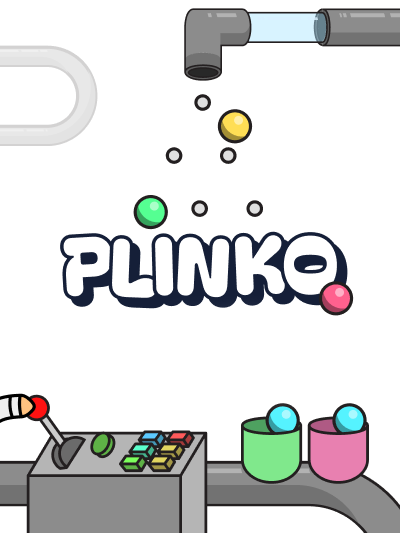
Cost and speed matter, but trust increasingly decides which crypto brand a player chooses. White-label and turnkey casinos run an off-chain RNG, certified at best and asserted at worst. On-chain casinos draw randomness from the chain and settle publicly in roughly 390 ms with fees under $0.01, so results are verifiable by anyone. Suigar's contracts were audited by MoveBit on 2025-11-10, and the consumer-side walkthrough of provably-fair Plinko shows what verifiability looks like in practice. The approach echoes how Chainlink VRF established verifiable randomness elsewhere.
The decision matrix
Here is how the three models stack up across the factors that matter, framed as a quick decision matrix. Read each row as one dimension and how each model handles it.
| Dimension | White-label | Turnkey | On-chain |
|---|---|---|---|
| Time to launch | Fast (weeks) | Slowest (months, bespoke build) | Fast (weeks) |
| Operator control | Least; vendor constraints | Most; you own the stack | Brand and data, not the liabilities |
| House-bankroll risk | You fund and absorb it | You fund and absorb it | $0; shared protocol liquidity |
| Revenue model | ~15-40% GGR revenue share | Build cost plus ~15-40% GGR share | 0% GGR haircut; tied to volume |
| Games included | Varies by provider | Varies by provider | 8 first-party games |
| Player-fund custody | Usually custodial | Usually custodial | Players can self-custody |
| Fairness proof | Off-chain RNG, certified | Off-chain RNG, certified | Provable on-chain; ~390 ms settlement |
A short framework to choose your model
If the matrix above leaves you torn, work through this quick decision sequence. For the technical grounding behind the on-chain option, the overview of Sui casino software explains what runs on-chain and what you build.
- Score your capital. If funding and risking a house bankroll would strain you, eliminate white-label and turnkey and look hard at on-chain shared liquidity.
- Score your timeline. If you must launch fast, drop turnkey; both white-label and on-chain get you live quickly.
- Score your control needs. If owning the full stack is non-negotiable, turnkey leads; if owning brand and data is enough, on-chain gives control without the liabilities.
- Score your trust story. If provable fairness is core to your positioning, only on-chain lets you make a verifiable claim.
- Tally the wins. Whichever model wins the most factors that matter to you is your answer; for most undercapitalized founders that is on-chain.
Which model should you choose?
Choose white-label if you want the cheapest, fastest traditional entry and can stomach funding a bankroll and a permanent revenue share. Choose turnkey if control and customization justify higher cost and slower launch, and you have the capital to back a bespoke build. Choose on-chain if your priorities are eliminating bankroll risk, owning a defensible trust story, and tying economics to volume. If you are weighing the end-to-end build, the guide on how to start an online casino on-chain walks the full sequence.
For most new operators in 2026, the on-chain model is the strongest default, not because crypto is fashionable but because removing bankroll risk and a black-box RNG fixes the two failure modes that sink young casinos most often.
Frequently asked questions
What is the difference between white-label and turnkey casinos?
A white-label is a ready-made platform you skin and operate under the provider's constraints, fast and cheap to launch. A turnkey is a more bespoke, customizable build with greater control and ownership, but higher cost and a longer timeline. Both typically require you to fund the bankroll.
How is an on-chain casino different from both?
An on-chain casino runs games, randomness, and settlement on a public blockchain. It launches as fast as a white-label, but the bankroll is shared protocol liquidity rather than yours, results are provably fair, and players can self-custody, which neither white-label nor turnkey offers natively.
Which model is cheapest?
On total cost, the on-chain model usually wins, because it removes both the perpetual revenue share (commonly ~15-40% of GGR) and the capital tied up in a house bankroll, taking both to $0. White-label is cheap upfront but charges that GGR share; turnkey is the most expensive to build, with licensing alone often in the five- to six-figure range.
Which model gives me the most control?
Turnkey gives the most control over the full stack. On-chain gives strong control over the parts that differentiate you, namely brand, front end, player relationship, and on-chain attribution, without making you own randomness, custody, or the bankroll.
Do I fund the bankroll in every model?
In white-label and turnkey, generally yes. On a Suigar on-chain white-label, no: games run on shared Suigar liquidity, so the protocol provides the bankroll and you do not take house-bankroll risk directly.
Which launches fastest?
White-label and on-chain are the fastest, often measured in weeks. Turnkey is slowest, frequently several months, because of the bespoke build and customization. With on-chain, all 8 games and settlement already exist, so your timeline is mostly brand and compliance.
Do any of these remove the need for a license?
No. Licensing still matters in all three models, and this is not legal advice. On-chain transparency and self-custody can change your regulatory posture, but you should still take licensing seriously and consult qualified advisers.
The takeaway
White-label, turnkey, and on-chain are not three flavors of the same thing. White-label trades control for speed; turnkey trades speed and cost for control; on-chain trades a small loss of stack ownership for no bankroll risk, lower ongoing cost, and a trust story the others cannot match.
Map your own priorities onto the decision matrix above and the answer usually becomes obvious. For operators who care most about surviving the early variance and standing out on trust, on-chain is the model that wins.
Sources and further reading
Sui on-chain randomness, Sui documentation.
Verifiable random functions, Chainlink VRF overview.
Smart-contract audits, MoveBit.
On-chain betting market context, GambleFi overview.
Operator licensing, gambling licenses guide.
Gambling involves risk and is intended for adults only. Operators are responsible for compliance, age verification, and responsible-gambling practices in every market they serve.